Stefan Stowell: Building a Future in Behavioral Health
Stefan Stowell turned his own experience with recovery into a career helping others navigate substance use challenges. Through the Apprenticeship College of Health, he is building on that experience with an Apprenticeship Degree that connects classroom learning directly to his work in the field.
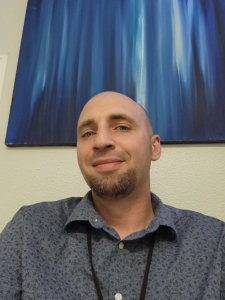
Stefan Stowell knows firsthand that recovery is rarely a straight line. Today, he is building a career in Lacey, Washington, helping others overcome substance use challenges, but his journey began in a very different place. “I grew up in the greater Seattle area in a household where drugs and alcohol were normalized. It was a big part of my childhood,” Stefan said. “I struggled with addiction from a very young age.”
Stefan’s struggles with addiction eventually led to incarceration when he was 20 years old, giving him his first opportunity to step back and evaluate the direction his life had taken:
“When I was in prison, it was the first time that I got some mental clarity. I got to look at my life, and I didn’t really like what I saw, and I didn’t really have any positive influences in my life to show me otherwise.”
Over the next 15 years, he experienced repeated setbacks in his personal and professional life before eventually finding his path forward after attending the Salvation Army’s treatment center at 34:
“It was the first time I really got experience with people who told me that I could have a different way of living and be happy. They could identify with a lot of things that I’ve been through.”
After several years of treatment and addressing both addiction and mental health challenges, Stefan is now in recovery and works as a Substance Use Disorder Professional Trainee (SUDPT), supporting others facing the same struggles. The SUDP Apprenticeship Degree program trains candidates to provide substance use disorder assessment, counseling, and care coordination in clinics, treatment programs, and healthcare settings.
For Stefan, the Apprenticeship College of Health’s (ACH) work-embedded model has allowed him to earn a no-cost degree while continuing to earn a wage and work in the field. He has found one of the biggest benefits of the program is being able to immediately apply what he learns in class on the job and bring his real-world experience to his studies. Stefan says connecting his coursework with daily practice has accelerated his learning and professional growth: “Every week that I’ve been in class, studying [clinical documentation] starts to make more sense. I’m starting to see the connection between giving a clinical interpretation in different dimensions and how that guides the treatment plan for the clients.”
Looking ahead, Stefan is optimistic about the future. He believes the knowledge and experience he gains through ACH will help him provide even better care, deepen his professional relationships, and continue growing into his authentic self. Most importantly, he hopes his story serves as a reminder that change is possible:
“I want to be in this field because I care about helping other people. My main goal is to help others effectively, accurately, and with compassion. I like to say to my clients: ‘If I can do recovery, you can, too.’”
